
Assistant Professor of Sociology & Criminology at Simon Fraser University

I am an assistant professor at SFU's School of Criminology specializing in Indigenous justice, prisons, extremism, and social movements. My research focuses on two distinct areas. The first centres on right-wing populism and extremism, looking at nationalist movements in Canada and Germany. I am also project manager of the University of Alberta Prison Project, a multi-year study of life experiences with Canadian prisons and re-entry, where I write about Indigenous issues. I am a citizen of the Red River Métis Nation and am working to develop cultural supports for justice-involved Indigenous people.
Latest Updates
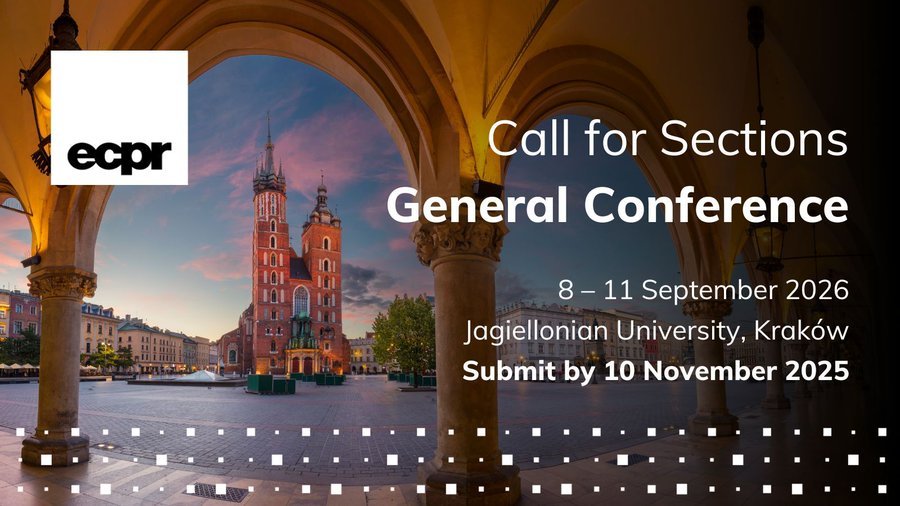
September 1 2026: I am attending two conferences in Poland: the European Consortium for Political Research (ECPR) in Kraków and the European Society of Criminology in Warsaw. These events overlap during the week of September 7-13.
Please get in touch if you would like to meet - I’m always happy to chat with colleagues and students.
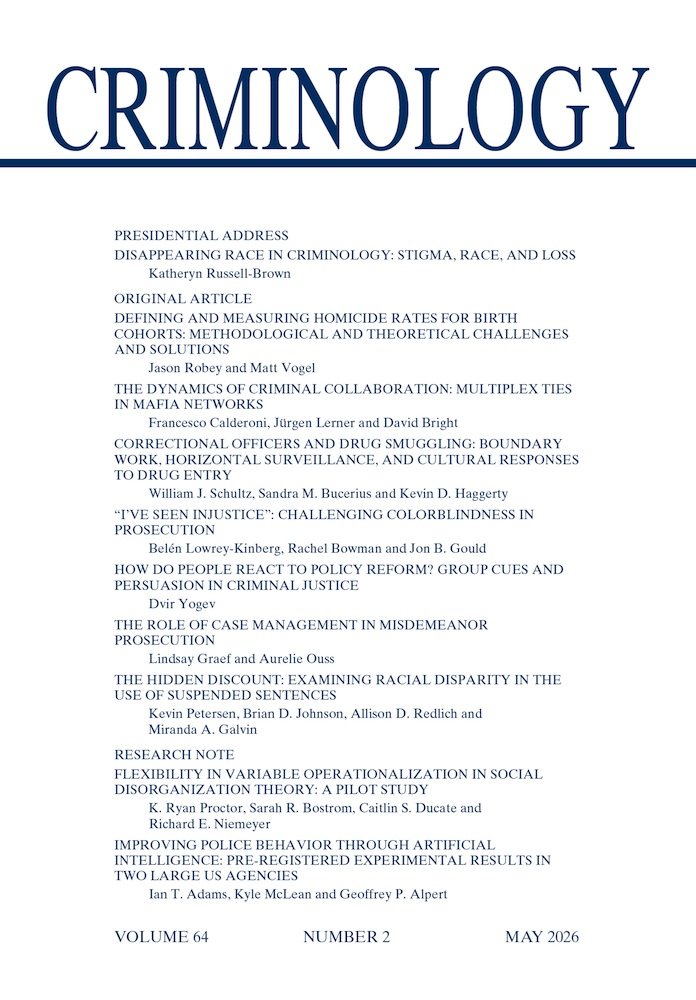
June 11 2026: New article in Criminology, “The Informal Prisoner Justice System: Classification, Identification, and Punishment of Sex Offenders Behind Bars” [early access].
Abstract: Drawing on 576 interviews with incarcerated men and 131 correctional staff across five Western Canadian prisons, we reconceptualize the prison code as subcultural law, documenting the “informal prisoner justice system” as its enforcement arm. Although scholars have treated the code primarily as cultural values prescribing loyalty, silence, and moral boundaries, we show how it operates through systematic enforcement. Through analysis of violence against sex offenders, we identify three core processes that parallel formal legal systems: classification (defining deviant categories), identification (investigating violations through evidence and verification), and punishment (administering sanctions from ostracism to lethal violence). This informal system achieves remarkable procedural consistency across institutions without being coordinated by gangs, leaders, or formal organization, operating instead through shared procedural knowledge that allows even unacquainted prisoners to organize enforcement. Correctional officers sometimes facilitate this system through selective non-intervention and information sharing, producing conditions of dual authority where official rules coexist uneasily with prisoner governance. By foregrounding the informal justice system as governance and showing how it anchors the code as law, we shift attention from prisoners’ beliefs to their governance infrastructure, challenging criminology to reconsider assumptions about how order, control, and legitimacy function behind bars.
December 10 2025: Presentation on Indigenous health and incarceration experiences for the UBC Learning Circle.
Description: This session will focus on the overrepresentation of Indigenous people within the carceral system and the impacts that has on individual and communal wellbeing. We will explore the health disparities for incarcerated Indigenous Peoples in Canada and highlight the importance of cultural programming for healing and creating support networks among incarcerated people. Dr. Tetrault will focus on Indigenous-led programming highlighting both the benefits and challenges, acknowledging the tension around healing in a colonial institution.
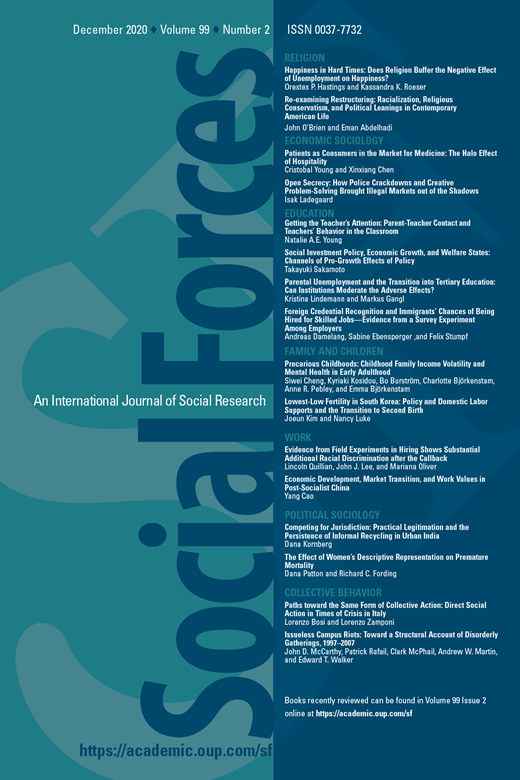
June 1 2025: New article in Social Forces, “How liberalism accommodates far-right social movements: on “mainstreaming” and the need for critical theory in far-right studies”. Volume 103, Issue 4, Pages 1560–1580.
Abstract: Scholarship on social movements, racism, and nationalism increasingly falls under the purview of “extremism studies” and its subfield “far-right studies.” Prominent extremism scholars have developed generalist theories purportedly explaining far-right politics and power dynamics (or “mainstreaming”) across liberal societies. They define “far-right” as “illiberal” politics promoting dehumanization, exclusion, and inequality. Their theory of mainstreaming suggests that “the” far-right is a coherent entity that “enters” mainstream institutions or discourse from the outside. For these scholars, strengthening liberal-civic principles prevents far-right political power (mainstreaming). I call these approaches “grand theory templates,” which I critique for simplistic interpretations of power and for overlooking critical theory scholarship showing how liberalism accommodates far-right politics. Using the Canadian nationalist movement as a case study, I show how liberal chauvinism can be crucial to empowering right-wing populist movements. My data include over 40 hours of participant-observation at 20 right-wing events and 35 interviews with 42 current leaders and members of on-the-ground nationalist groups. Right-wing nationalists foregrounded liberal-civic ideas, such as “security,” “rights,” “objectivity,” and “tolerance,” to advance anti-Muslim sentiment and populist conspiracism. My findings suggest that far-right movements can gain power by embracing liberalism’s ambiguity and contradictions. In other words, mastering liberal messaging can be essential to the growth of far-right movements, challenging any easy dismissal of these politics as “illiberal.” Altogether, “top–down” grand theory templates oversimplify political distinctions and power, compromising research design and analysis. I advocate for more granular and “bottom–up” inductive approaches that prioritize sociological traditions over theories recently popularized by extremism scholars.